


In brief
- Japandi combines ideas inspired by Japanese and Scandinavian design.
- The style is characterised by restrained forms, clear textures and an uncluttered setting.
- Bedroom beds can become the starting point for the whole combination through their shape and upholstery.
- Bedside tables do not have to repeat every detail of the central piece.
- Bedding and other textiles introduce lighter, softer surfaces.
A Japandi bedroom depends on the balance between restrained forms, materials and open space. Furniture may be dark, textiles light, and a small stronger accent can still fit the whole composition.
What lies behind the name Japandi?
The name describes an interior direction combining Japanese and Scandinavian design ideas. It is commonly associated with restraint inspired by Japanese minimalism and Scandinavian functionality. The name is newer than the relationship between these design traditions.
The influence of Japanese art and craft on Danish design was visible around the beginning of the last century and continued later. In contemporary interiors, this relationship gained its own name.

TEDDY OVAL bed, cream white
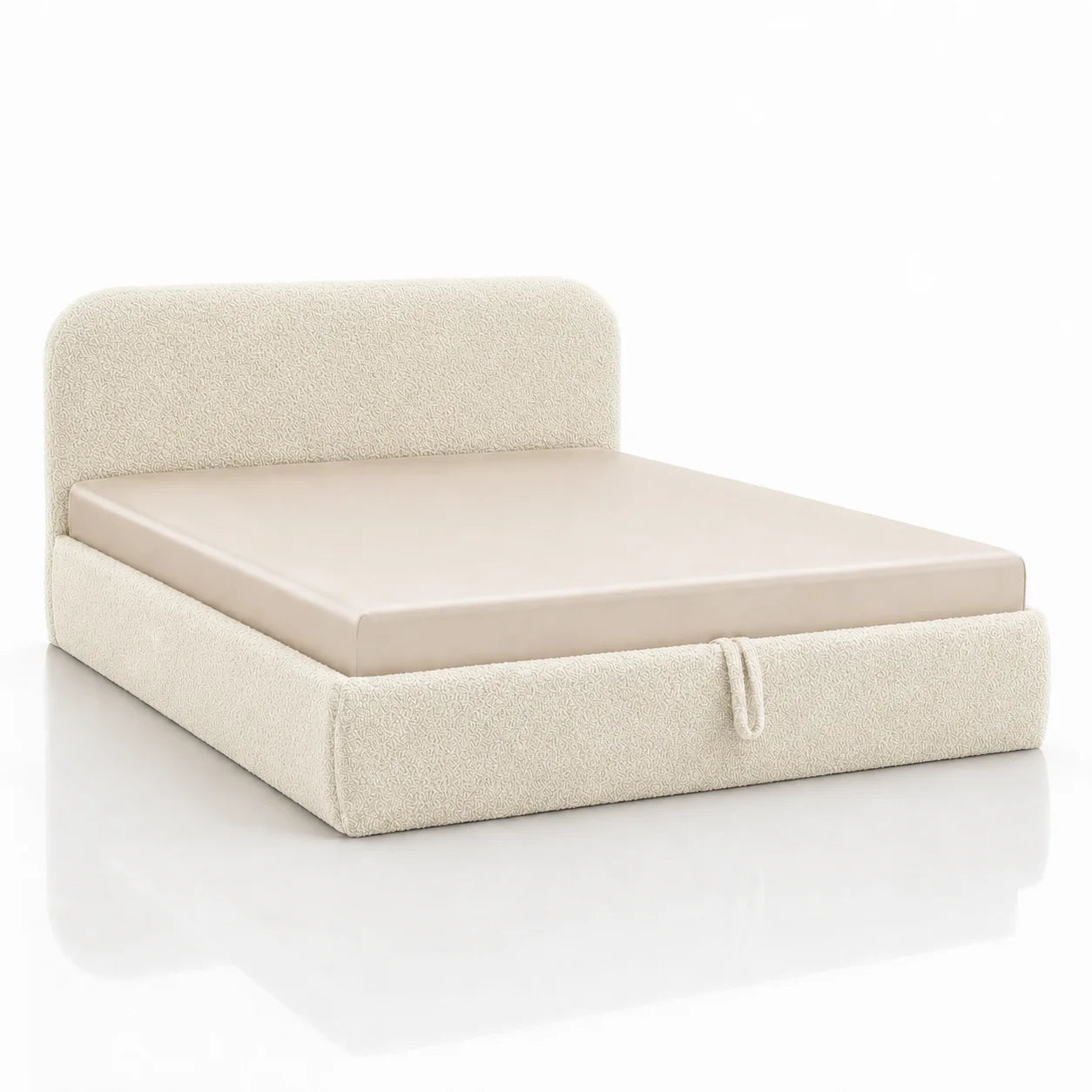
Our bed is shown in the image. The room is an interior idea.
How does it differ from a Scandinavian interior?
Both directions can use simple forms, wood and light textiles. A Japandi composition often pays more attention to empty space, surface character and a more restrained arrangement of objects. These qualities appear differently in every room.
The differences are clearer in the complete setting than in one piece of furniture. The same upholstered item may look cosily Scandinavian in one room and become part of a quieter composition in another. Surrounding textures, contrast and the number of objects create the distinction.

TEDDY OVAL bed, grey-green
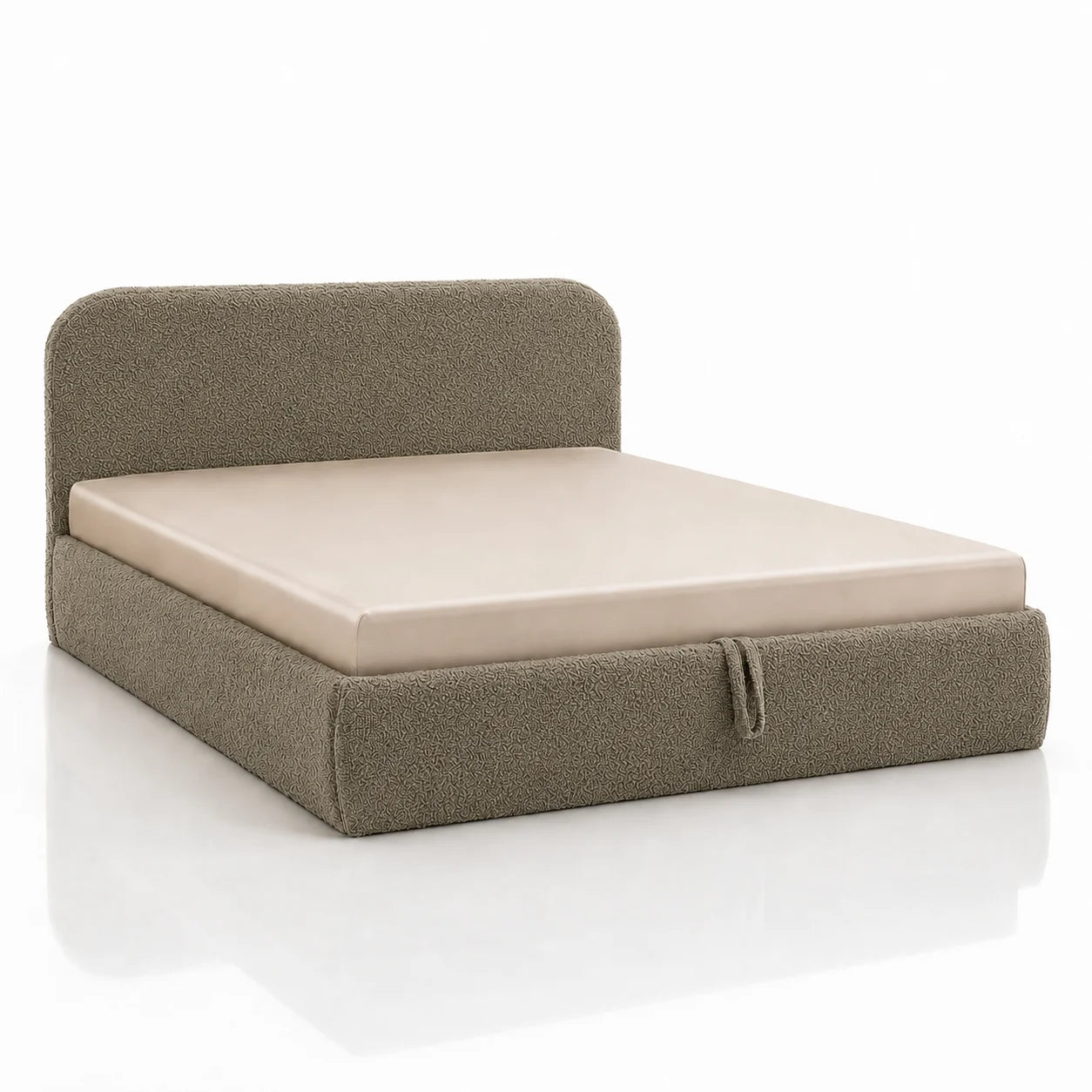
Our bed is shown in the image. The room is an interior idea.
Colours: from pale tones to green accents
This style favours restrained, muted colours. A calm palette can include both light and dark tones. Dark brown adds depth, while light textiles make the furniture outline clearer.
We propose three original colour directions. They help illustrate the relationship between shades in a room.
| Combination | Base | Surface highlighting the furniture | Textile direction |
|---|---|---|---|
| Warm and light | Ivory tone | Pale wood tone | Natural canvas feel |
| Deeper contrast | Soft off-white background | Brown or darker wood | Light, simple textiles |
| Restrained green | Warm grey background | Calm wood tone | Muted green accent |
The first combination is closer to one light, continuous setting. The second emphasises the difference between a light background and darker furniture. In the third, a small area of textile introduces colour, so the major surfaces do not need to change.


Materials matter even when there are few colours
Japandi materials are often associated with visible wood grain, textile texture and restrained ceramics. Surfaces can remain distinct without bright colour: a smooth wall, wood grain and textured upholstery all read differently.
In the illustration, the Denora bed's soft WOOLY fabric and rounded forms become the starting point. The fabric fibre composition is listed in its description.
How the furniture combination comes together
A Japandi bedroom can be coherent without furniture in identical colours. A rounded upholstered headboard can be paired with a simpler side surface. Different forms complement one another in a restrained setting.
The place for objects matters as much as their appearance. An everyday book or glass adds life to a quiet interior. Our combination needs only one clear central piece, calm textiles and a few simple details.
We continue broader room planning, colour combinations and object placement on our bedroom ideas page. This article has a narrower focus: how forms, textures and restrained contrast meet within one particular interior direction.
Frequently asked questions
Does a Japandi bedroom have to be only beige?
No. A restrained palette may include brown, grey, green or darker accents. Their relationship matters, not one compulsory shade.
Does upholstered furniture suit this direction?
Yes, it can form part of the combination. The overall effect comes from the furniture shape, fabric texture and setting, not only whether the frame is visibly wooden.
Must all furniture in the room belong to one set?
No. Different pieces can create a coherent combination when linked by restrained forms, coordinated surfaces or a shared colour direction.
Are the rooms in this article customer projects?
They are interior ideas prepared by Denora using our furniture. The images show different upholstery and room combinations.
